Serial and IMEI tracking
For Shop owners & staff · 6 min read · Last reviewed 2026-08-04
You don’t sell “a flagship phone” — you sell one specific handset with its own IMEI. In RetailPOS, serial-tracked items keep a separate unit record for every physical device, identified by its IMEI (phones) or serial number (laptops, TVs, cameras).
That identity is what turns a warranty walk-in from a receipt hunt into a two-second lookup: the unit knows which order it left on, so you can answer “did we sell this exact phone?” without digging.
Capture serials at intake
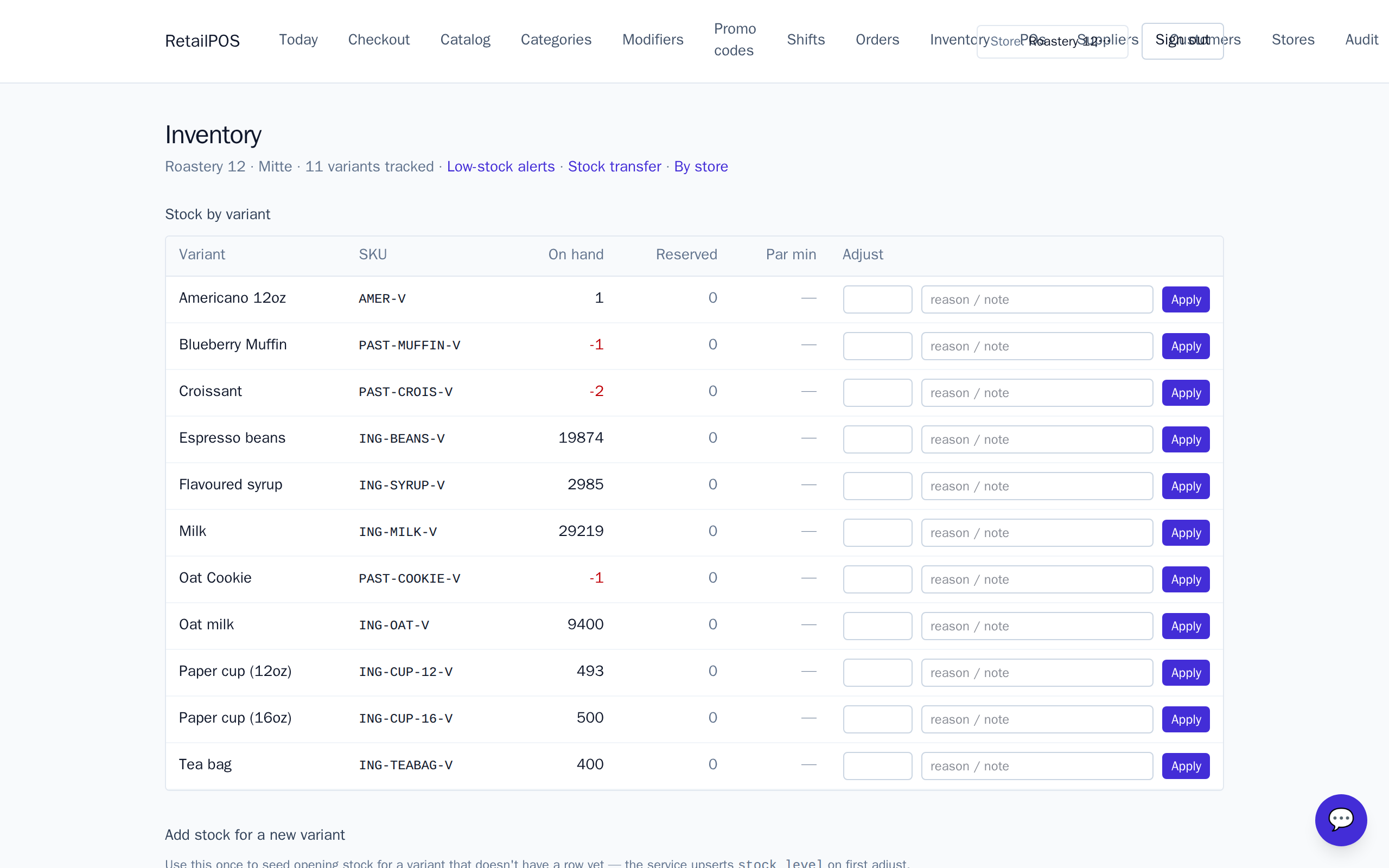
When a shipment lands, receive the devices and record each one’s IMEI or serial. Every scan or entry creates a unit record under that model, so ten identical laptops become ten distinct units you can tell apart.
Pick the exact unit at sale
When a serial-tracked device is rung up, the cashier chooses the specific unit leaving the shop. The customer walks out with that device, and its record now shows the order and the customer it went to. Ordinary accessories on the same receipt keep selling on plain stock counts as usual.
Look a device up later
Later — a return, a warranty question, an insurance claim — find the unit by its IMEI or serial and see when it was sold and to whom. Because the unit record is the source of truth, a refund flips the same device back to available rather than inflating a lump count.
Frequently asked
- What if two phones are the same model?
- Each still gets its own unit record keyed by IMEI, so you always know which physical handset you sold and which is still on the shelf.
- Do accessories need serials too?
- No. Cables, cases and protectors sell on ordinary stock counts. Per-unit tracking is reserved for devices you might need to look up by serial later.
- What happens on a refund?
- The returned unit flips back to available on its own record, so your counts stay honest rather than inflating a shared quantity.
Put it into practice.
Open your shop and try it live. Free until your first 100 sales — no card, keep your hardware.