End of day: shifts, cash drawer and the Z-report
For Cashiers & managers · 5 min read · Last reviewed 2026-08-04
A shift makes the cash drawer accountable. You open it with a starting float, sell all day, then close it by counting the drawer. RetailPOS works out what should be there and shows the variance — over or short — so nothing walks out unexplained.
One shift is open per store at a time. The Z-report is the day’s summary.
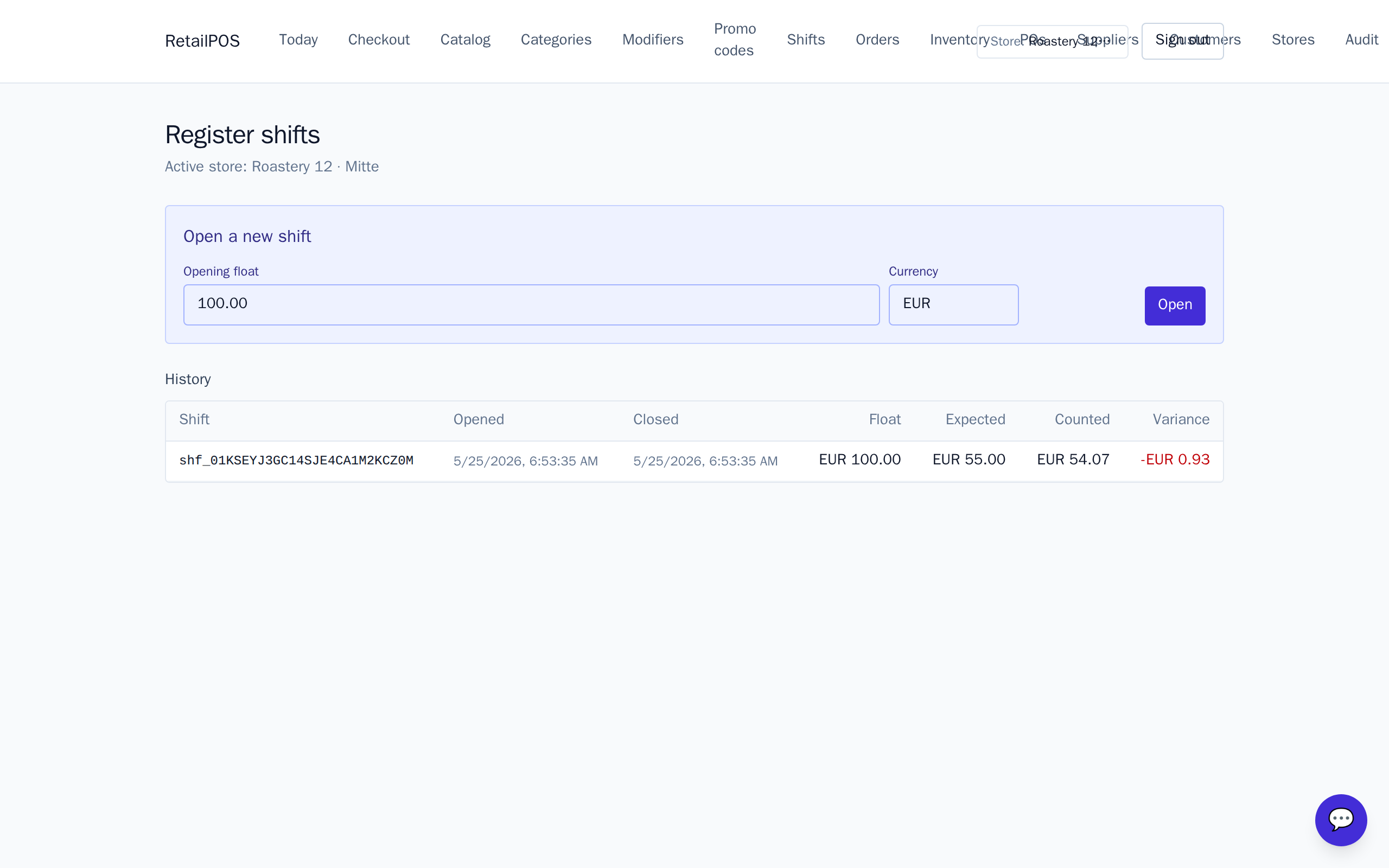
Open a shift
- Open Shifts and start a new shift for the active store.
- Enter the opening float — the cash you put in the drawer to make change.
Cash movements during the day
Record pay-ins (adding cash), pay-outs (paying a supplier from the till) and drops (moving cash to the safe) as they happen. Each one adjusts what the drawer should hold at close, so your variance stays honest.
Close and read the variance
At the end of the shift, count the drawer and enter the figure. RetailPOS computes expected cash as:
opening float + cash sales − cash change + pay-ins − drops − pay-outs
The difference between that and your count is the variance. A small variance is normal; a large one is worth investigating.
The Z-report
The Z-report(under Reports) is the day’s close-out per store: sales by tender, tax collected, and the cash-drawer maths above. Pair it with reports and exports for the fuller picture.
Frequently asked
- Can two shifts be open at once at one store?
- No. One shift is open per store at a time, which keeps the drawer maths unambiguous. Close the current shift before opening the next.
- What counts as a good variance?
- A few coins over or short is normal handling. A consistent or large variance points at a process or training issue worth investigating.
Put it into practice.
Open your shop and try it live. Free until your first 100 sales — no card, keep your hardware.